
Current Voltage Coil Resistance Ballast Resistance
- Take the 12v supply wire (originally this was white on CB cars, white/light-green on 4-cylinder RB, and white/light-blue on all V8s) off the coil.
- Connect an ammeter between that wire and the coil terminal it was taken from.
- Turn the ignition on, but only leave it on long enough to take a reading.
- If no current is displayed either the points are open (or disconnected) and you will get the same effect with some types of electronic ignition. In which case connect an earth to the 'points' terminal of the coil (NOT the 12v supply terminal!).
- You should see approaching 4 amps on all models i.e. both CB and RB with standard coils:
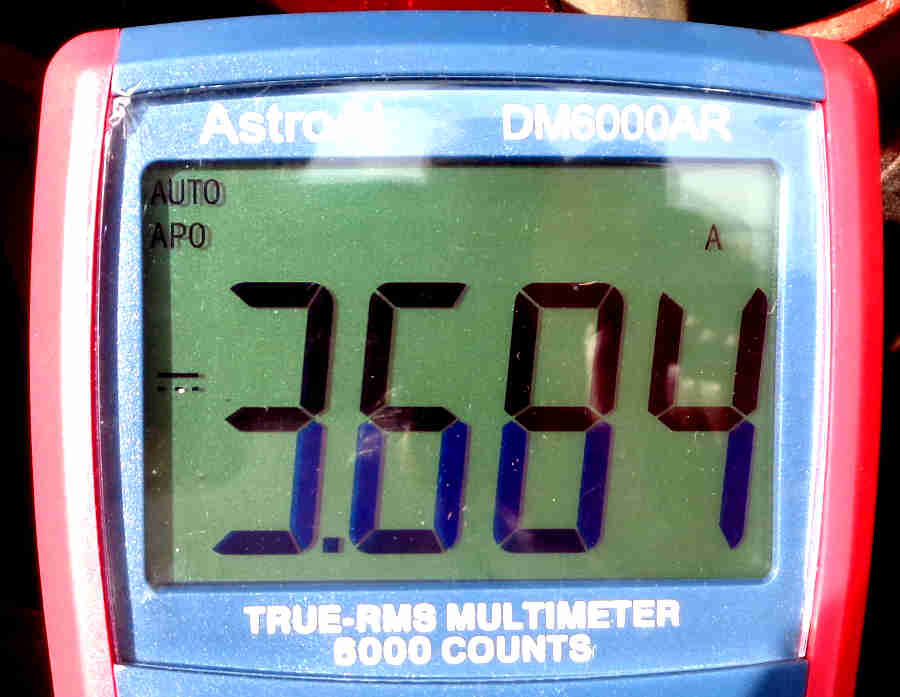
Slightly higher with a sport coil:
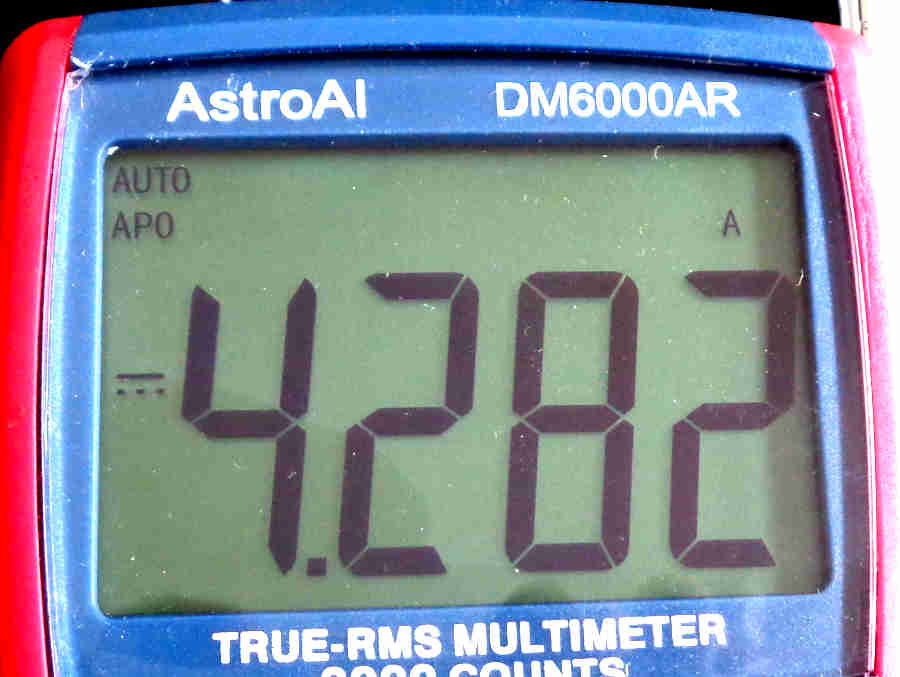
If you see less than 3 amps on an RB car as here (found on a car with workshop-fitted electronic ignition and replacement coil) you probably have a 12v coil with the factory ballast resistance still in circuit and will be getting a significantly reduced spark. You need to measure coil and ballast resistances as below:
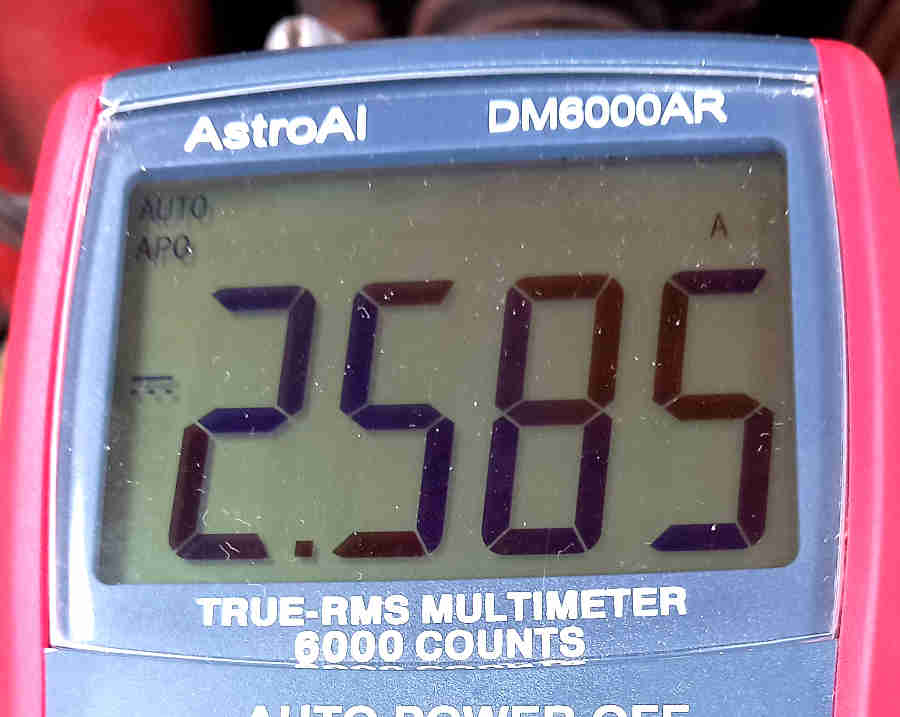
Note that in this case you could connect the coil +ve direct to the white or white/brown wires on the front of the second fuse up as a quick fix. That will restore running conditions to normal but you will have lost the 'coil boost' function which can make the difference between starting and not starting in adverse conditions.
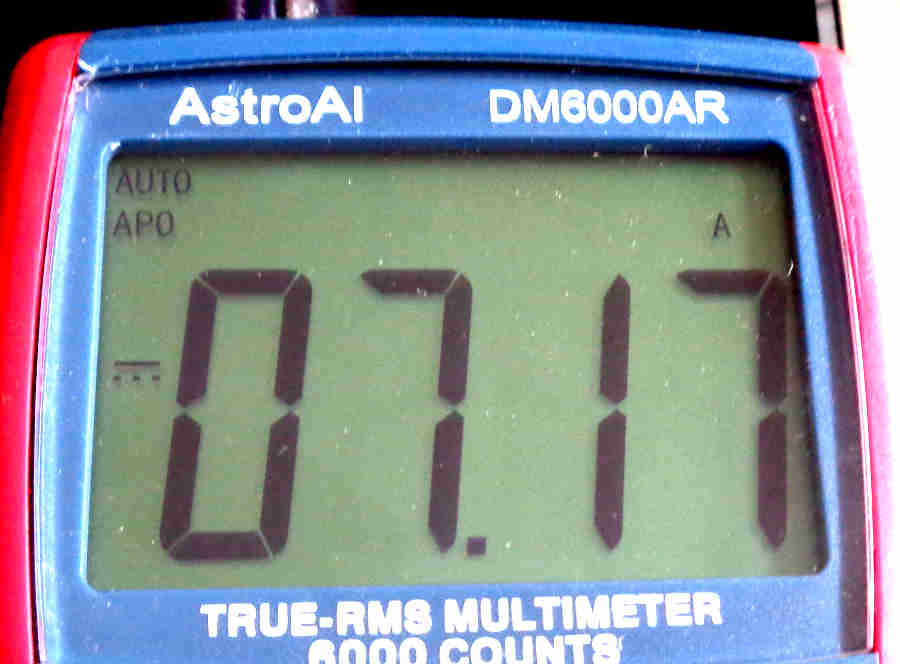
If you see approaching 8 amps you either have a 6v coil on a CB car, or the factory ballast resistance has been bypassed on an RB car. The coil will be overheating, if you have points they will be eroding badly, and if you have an electronic ignition module it may be destroyed. You need to measure coil and ballast resistances as below:
Coil volts - do not perform this test on North American models with factory electronic ignition.
- Connect a voltmeter to the two coil primary spades, wiring connected.
- Turn the ignition on, but only leave it on long enough to take a reading.
- If no voltage is displayed either the points are open (or disconnected) and you will get the same effect with some types of electronic ignition. In which case connect an earth to the 'points' terminal of the coil (NOT the 12v supply terminal!).
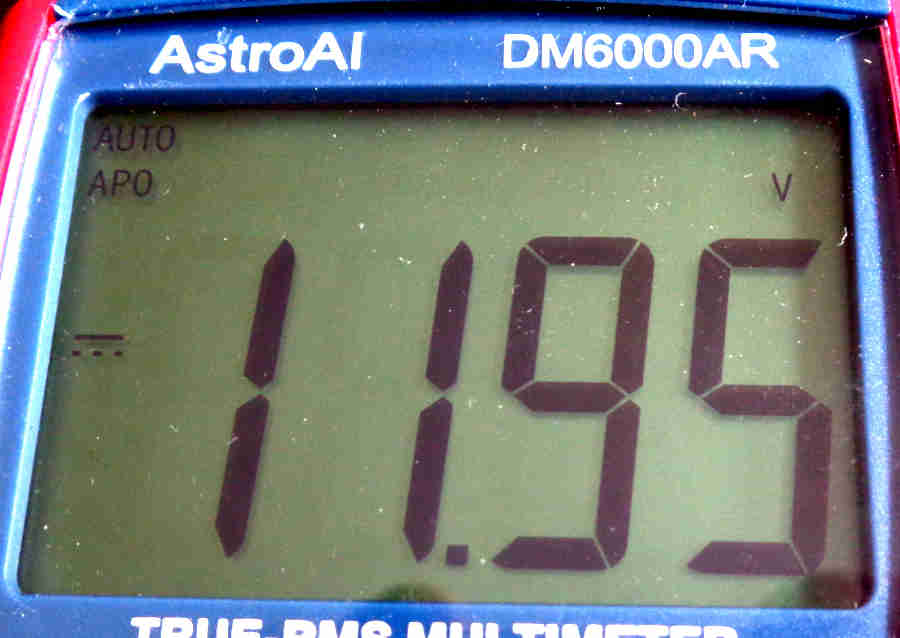
- On a CB car you should see about 12v:
On an RB car with factory wiring and coil you should see about 6v:
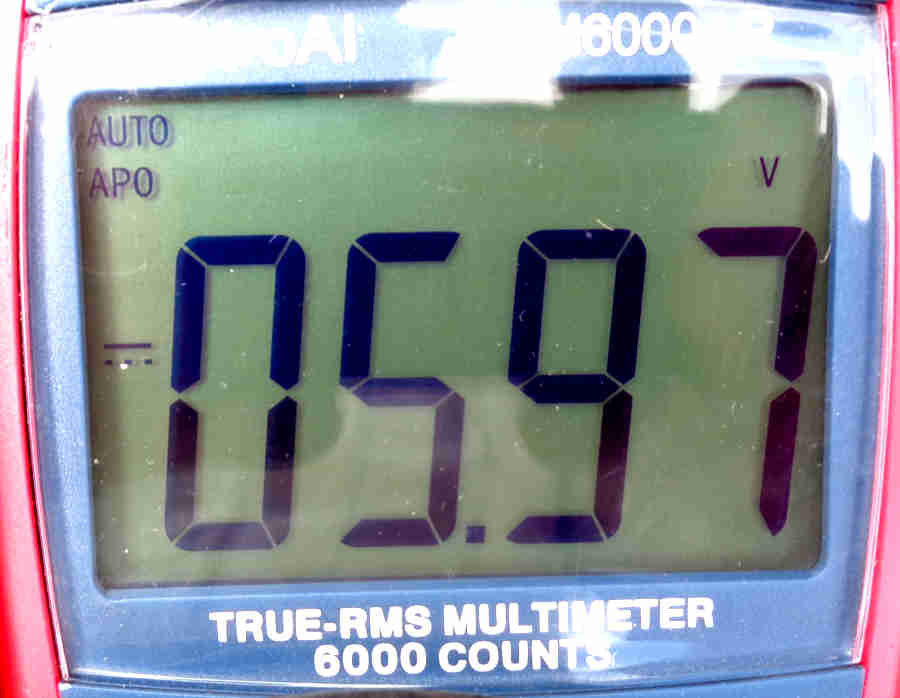
If you see 12v on an RB car the factory ballast resistance has been bypassed and you need to check you have the correct coil by measuring the resistance.
If you see approaching 8v on an RB car as here (found on a car with workshop-fitted electronic ignition and replacement coil) you have a 12v coil with the factory ballast resistance and will be getting a significantly reduced spark, you need to measure coil and ballast resistances as below:
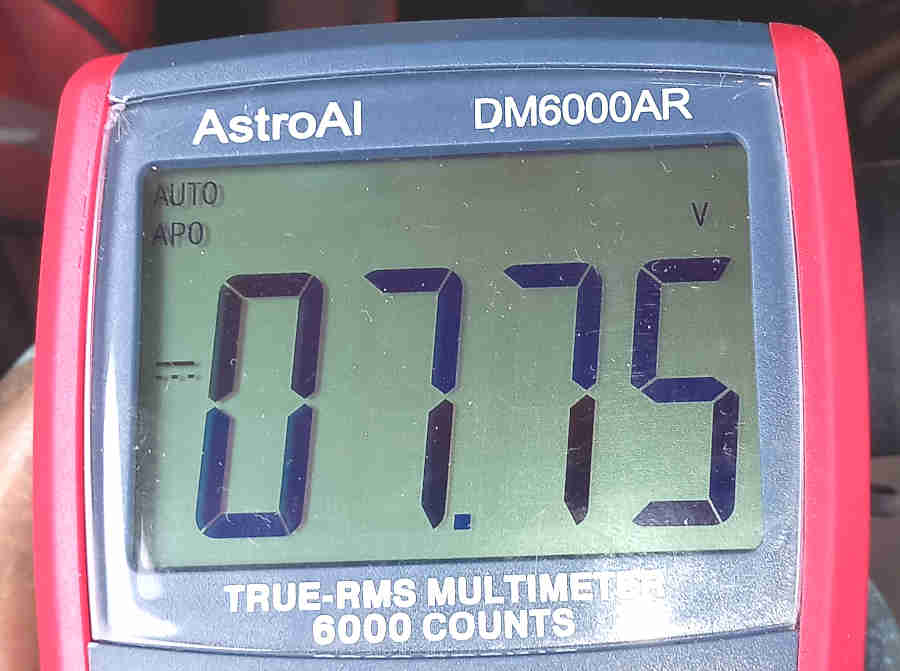
Note that in this latter case you could connect the coil +ve direct to the white or white/brown wires on the front of the second fuse up as a quick fix. That will restore running conditions to normal but you will have lost the 'coil boost' function which can make the difference between starting and not starting in adverse conditions.
Coil resistance. Take the wiring off the coil spades and connect an ohmmeter in their place.
This is a 12v coil and must not be run with additional ballast resistance:
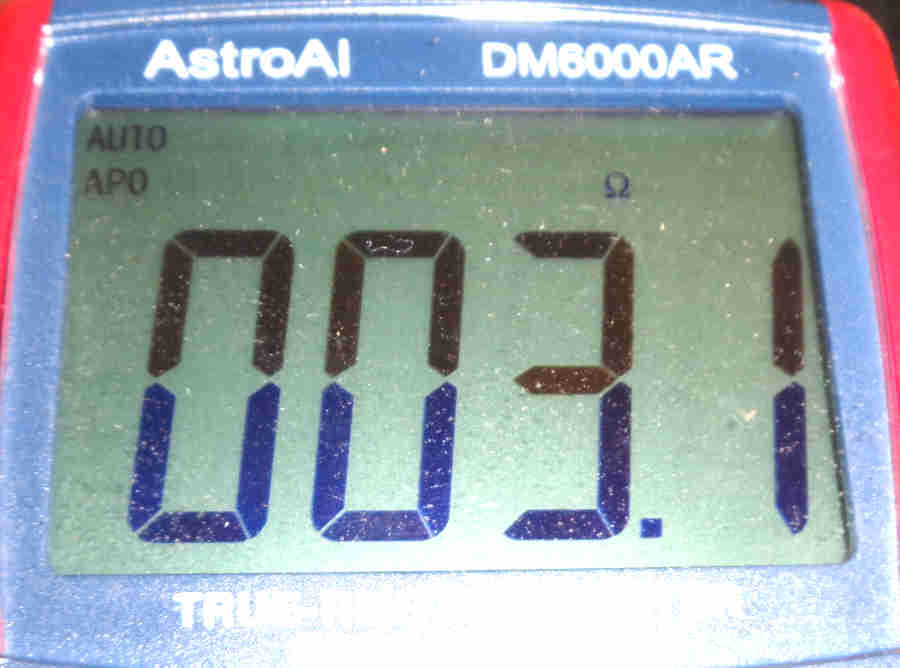
This is a 12v 'Sport' coil and also must not be run with additional ballast resistance:
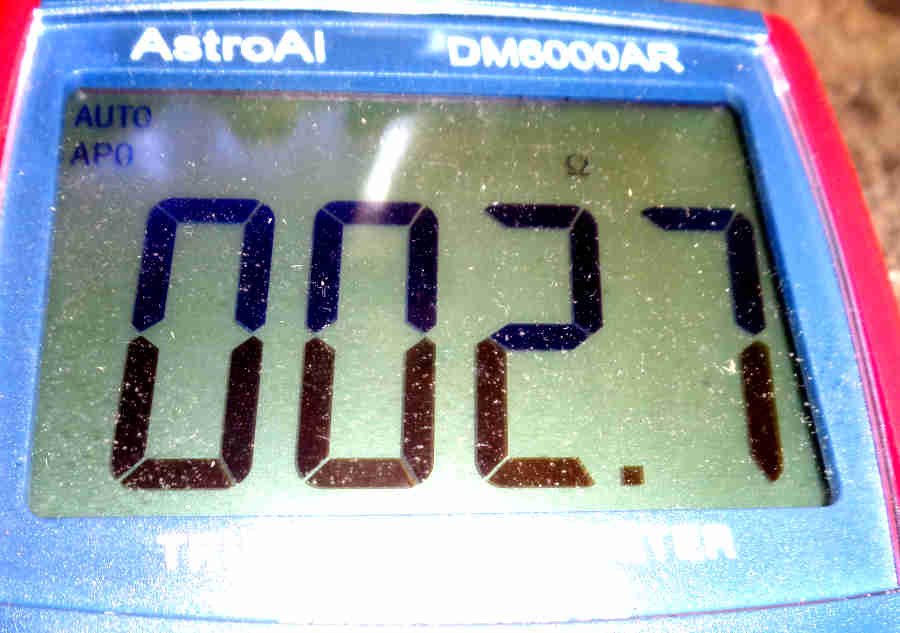
This is a 6v coil either standard or 'Sport' and must be run with a ballast resistance (in the harness originally) of about the same value:
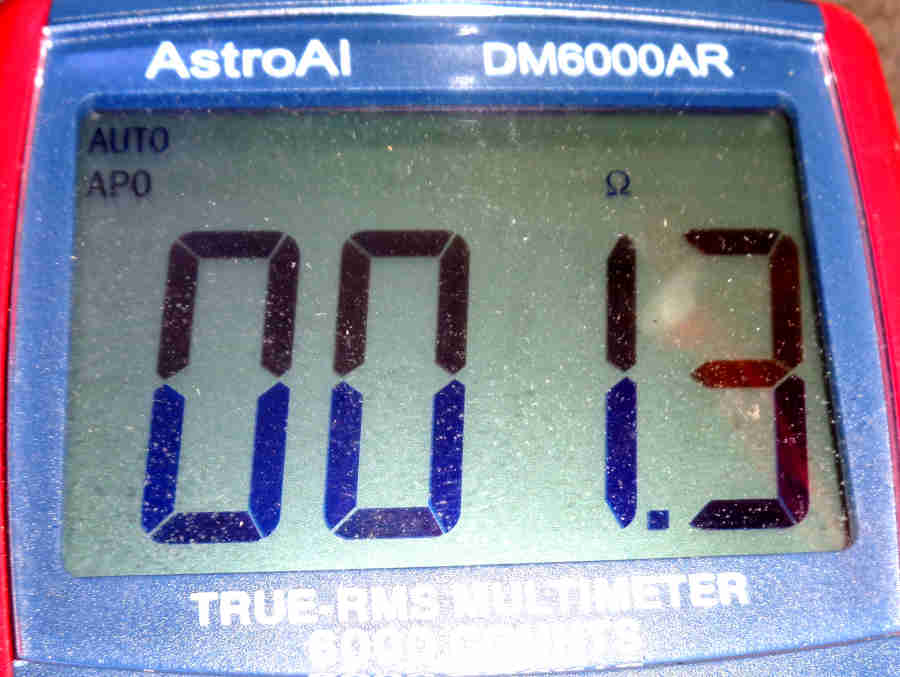
Ballast resistance. Take the 12v supply wire off the coil (originally white on CB, white/light green on 4-cylinder RB or white/light-blue on V8) and connect an ohmmeter between that and the white or white/brown wires at the fusebox. If this is a 77 or later car (white/brown wires at the fusebox 2nd fuse up front) turn on the ignition. Only leave the ignition on long enough to take a reading.
This is a CB car without any ballast, resistance very close to zero:
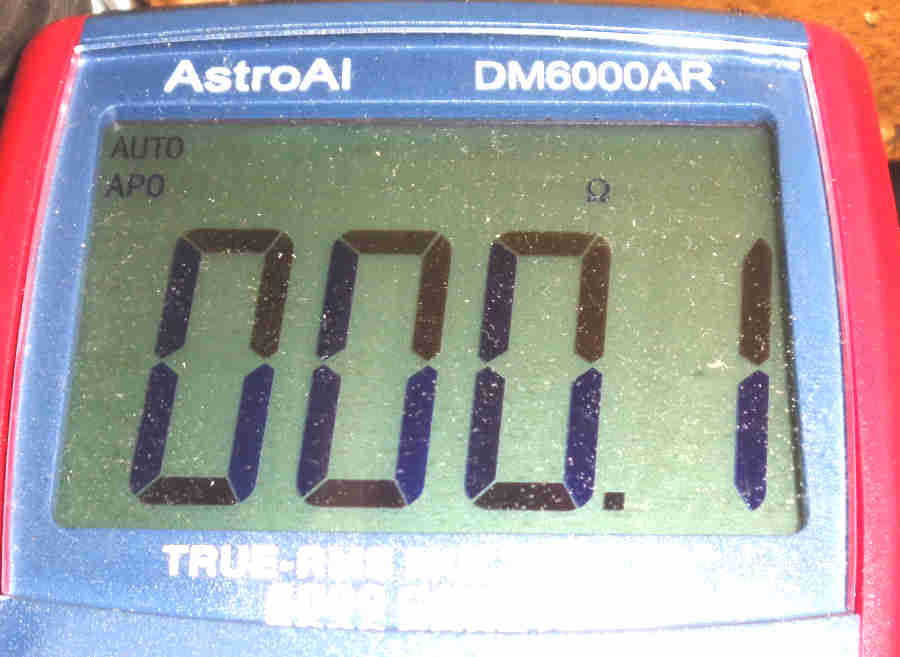
Note that prior to 1973 with an RVI tachometer the ignition supply to the coil went via the tach involving several additional connections and lengths of wire which will add a small amount of resistance. From 1973 it went direct from the fusebox to the coil +ve and should have negligible resistance.
This is an RB or V8 car with harness ballast to be used with a 6v coil (resistances can vary around 1.5 ohms):
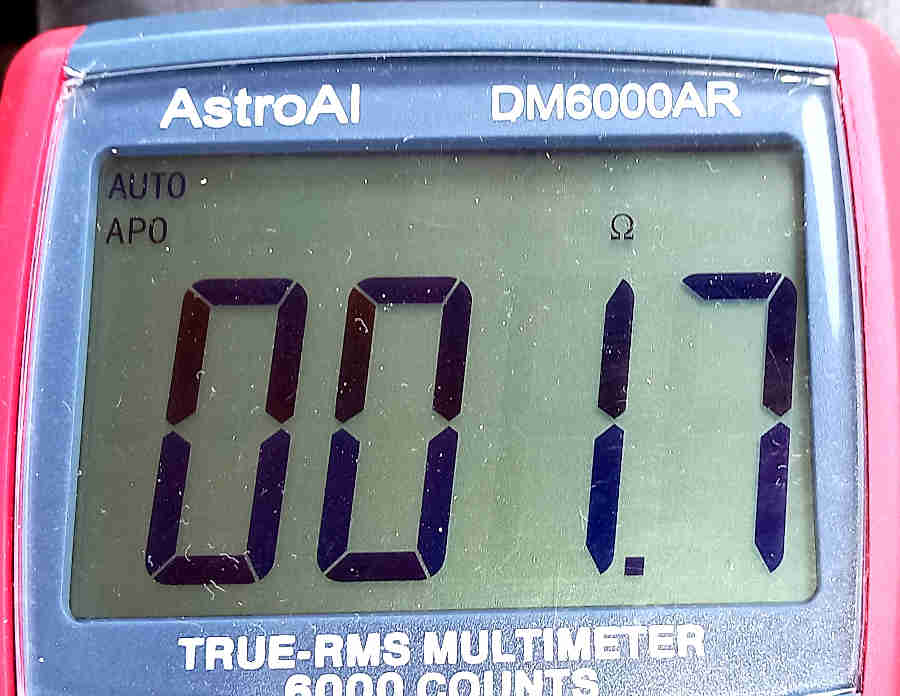
If showing open-circuit, have taken wiring connectors off the fusebox spades and there are two of them i.e. for three or four wires, connect the ohmmeter to the other wiring connector.