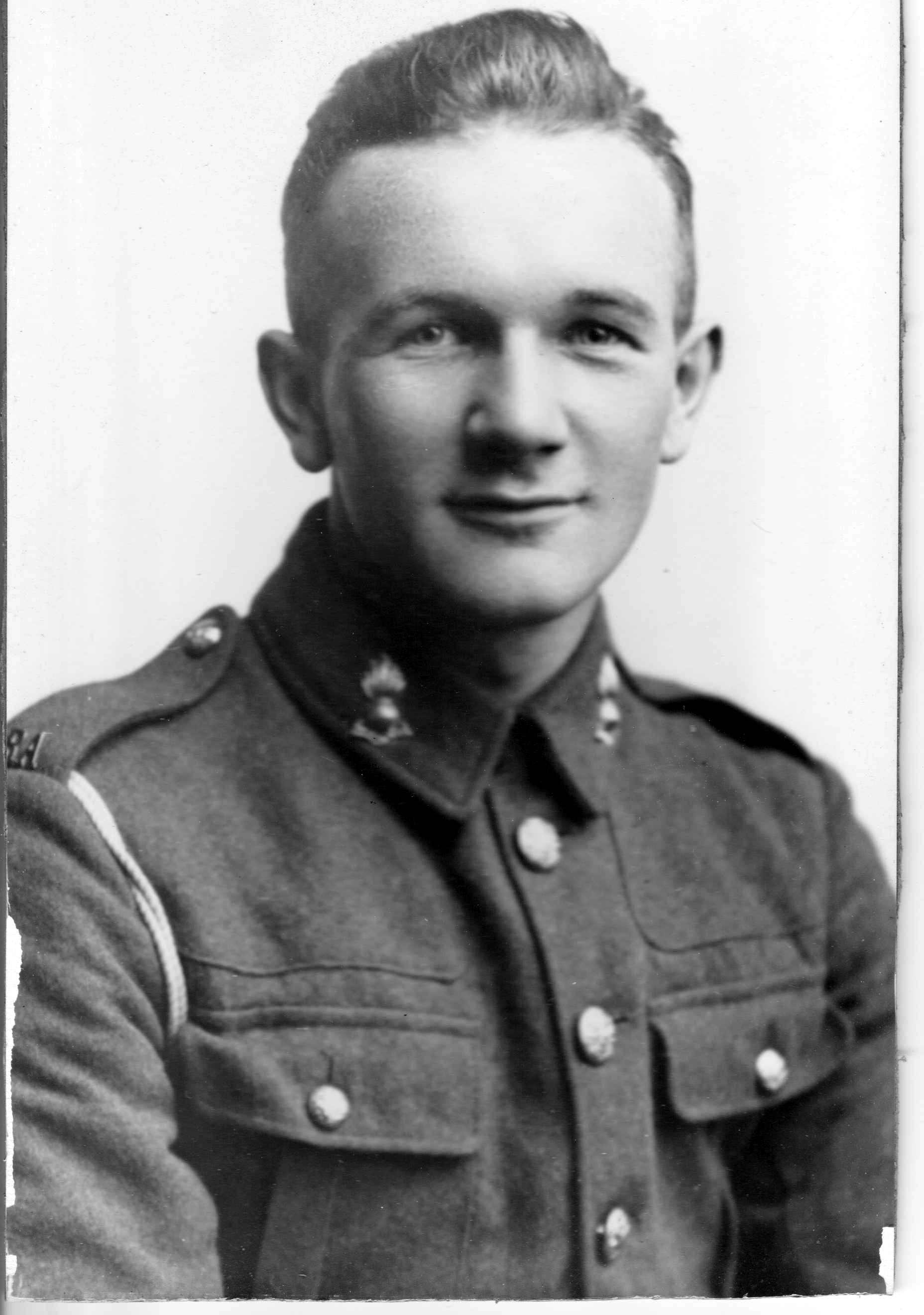
I had imagined this was taken soon after call-up but subsequently noticed the shoulder cord. This may signify he had been promoted to Bombadier (although Corporal chevrons which would normally accompany them not visible), so after training and maybe not long before embarkation for France:
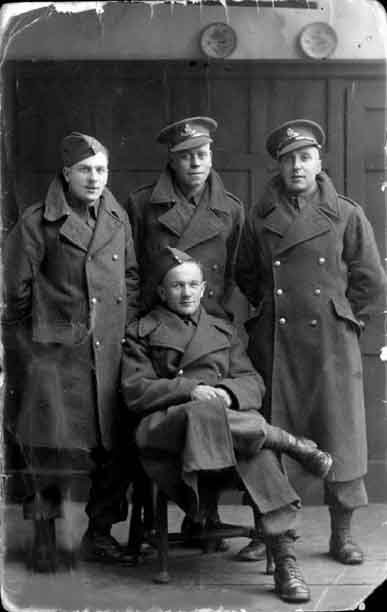
However when his status changed from 'missing' to 'captured' his rank is given as 'U/A/Bdr' in other words Unpaid Acting Seated with some mates, they now have greatcoats - distinction between forage caps and peaked caps not known:
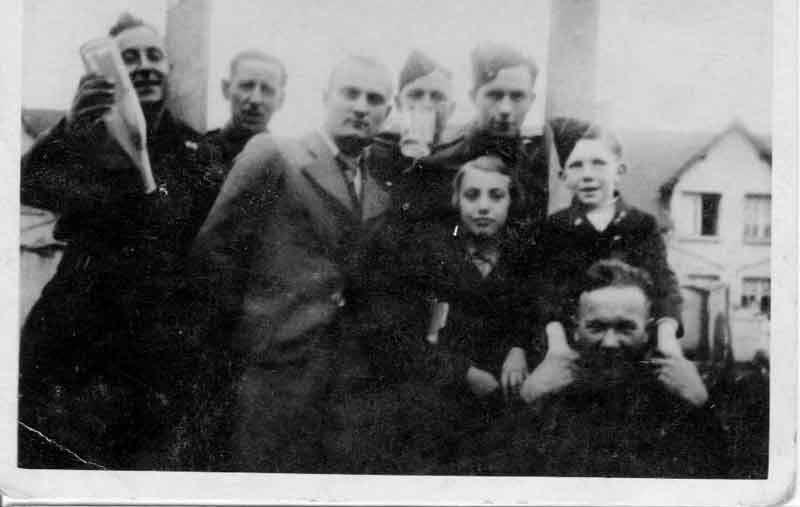
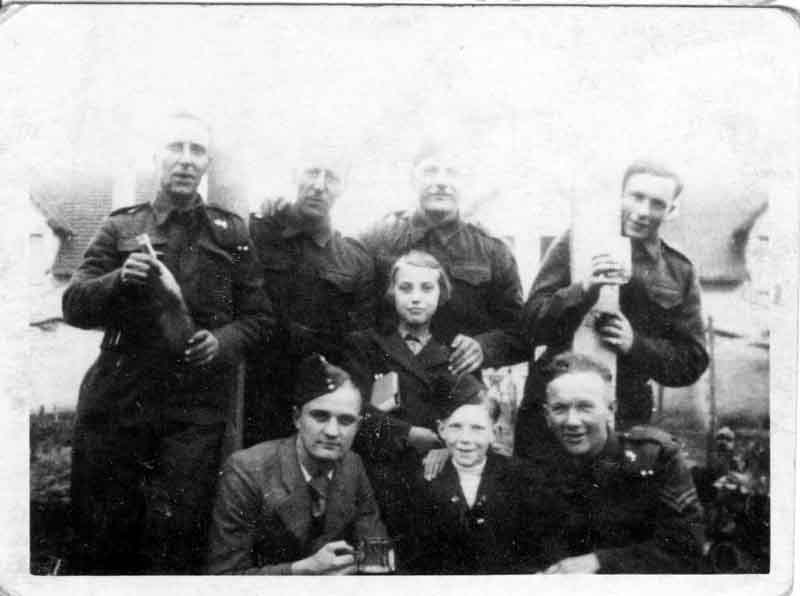
Captioned by Harry as 'Dourges 1940', Dourges is in northern France not far from Dunkirk. Harry was based there for a while during the 'phoney war' period in early 1940. Harry is bottom right, with Frank Barber upper right:
The reverse in Harry's handwriting:
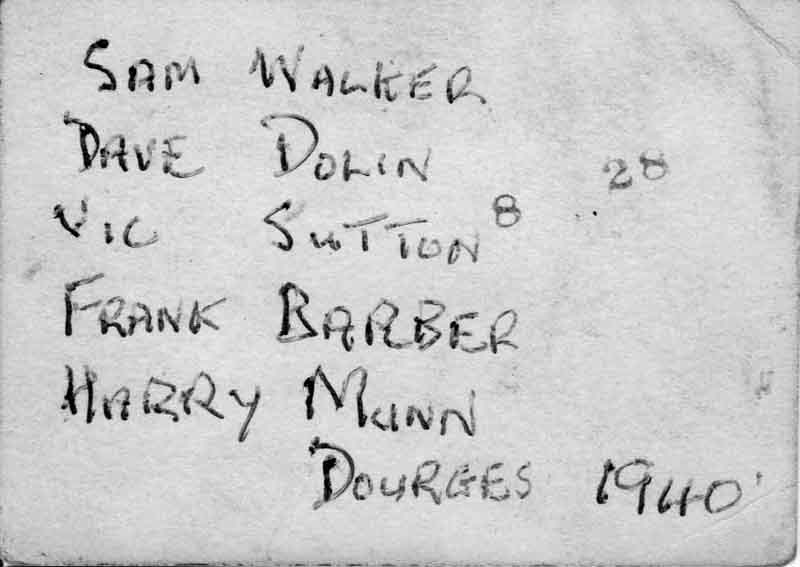
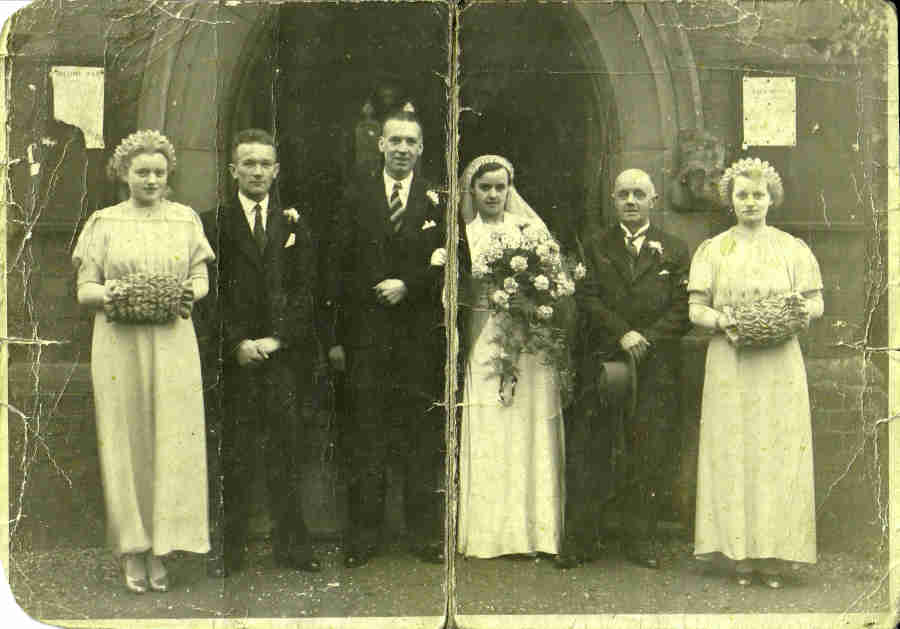
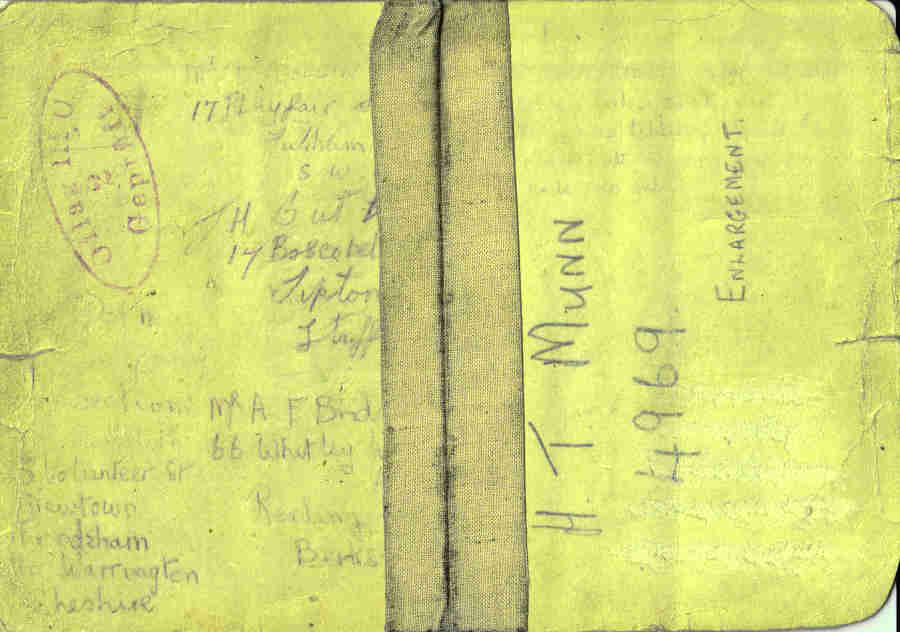
Dave Dolin (or Dollin) also seems to have been a POW in Germany with Harry as the back of another photograph (of a family wedding probably kept by Harry through the war) contains his name and address (Fulham, London) amongst others, all written in different hands:
Another photograph of the same group, Harry and Frank in much the same positions. This clearly shows Harry's Corporal chevrons:
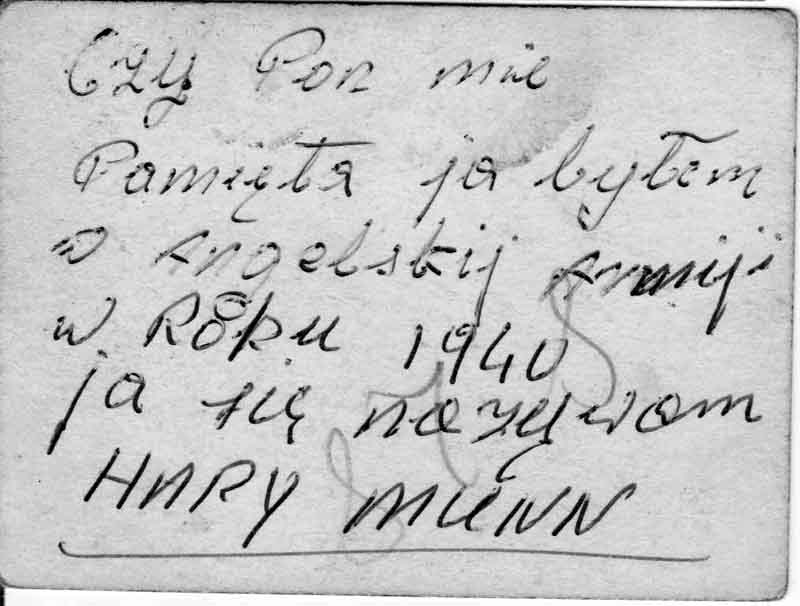
The reverse:
August 2025: Years later I come across Harry's record card very kindly supplied by Kyle on the WW2Talk forum:
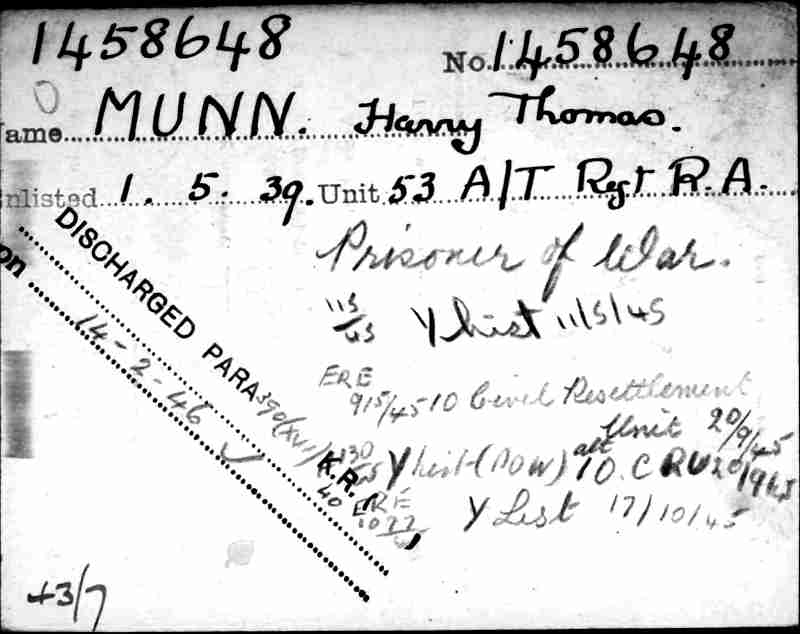
This makes reference to a 'Civil Resettlement Unit' which did their best to get returned POWs back into civilian and home life (Northfield in Birmingham is specifically mentioned as a CRU and it's possible that Harry went there as it's not that far from Kidderminster). As well as indicating the dates attended it mentions '10 CRU' but Googling that only came back with 'No.10 Special Reception and Training Unit (SRTU)' which was the pilot for the CRUs. This document says that one of the lessons learned from the pilot was that 'The "hutted camp" was too similar to a stalag'! However further Googling took me to a thesis on CRUs which has a map showing No.10 was near Cirencester at Daglingworth Camp. I was taken aback to discover that post-war Daglingworth Camp became a Polish resettlement camp - talk about history repeating itself (and despite the 'lesson learned' above consists of rows of huts) but with the boot on the other foot. Given my thoughts above about when the Polish inscription was done I can't help feeling that it would have been during his time at Daglingworth.