


Removal
Filter types and quality
Filter Head
Filter not sealing - hose positioning
Oil Pump
Oil Pressure Relief Valve
Block Adapter
Decals
After trying various makes over the years my preferred filter is the Mann W916/1. Available from loads of online sources at anything from under £3 to more than £15, but for the cheaper ones check for VAT and P&P. At the moment (July 2026) GSF have them at £7 including VAT and being just round the corner I can collect. Free delivery over £25 and so get 5L of Comma Classic 20W/50 at the same time, and currently an 'up to 30% discount' if you sign up for text marketing (cancellable at any time ...).
The 1977 LHD Workshop Manual AKM3524 gives the bypass valve opening pressure as 13 to 17 psi. Note that this is the pressure differential between the input and the output. On cold starts with thick oil this pressure can be exceeded, which can lead to holes being punched through the filtration medium. Note that some filters do not have a bypass valve.
The various styles of filter and head used over the years:
| Engine | Dates | Head | Filter | Notes |
| 18G, GA | All | 8G740 | 1H1069 | Teclamit suspended replaceable element |
| 18G, GA | All | 1H1052 | 1H1053 | Purolator suspended replaceable element |
| 18GB | Oct 64 - Nov 67 | 8G740 | 1H1069 | Teclamit suspended replaceable element |
| 18GD, GF, GG, GH | Nov 67 - Apr 70 | 12H2244 | 12H2258 | Teclamit Inverted replaceable element |
| 18GG, GH, GJ, GK 18V 581, 582, 583 18V 672, 673 | Mar 70 - Sep 73 | 12H3273 | GFE114 | Inverted spin-on cartridge |
| 18V 581, 582, 583 18V 672, 673 18V 779, 780 | Oct 73 - Jan 74 | 12H4405 | GFE148 | Suspended spin-on cartridge, see Note below |
| 18V 836, 837 18V 846, 847 18V 797, 798 18V 801, 802 18V 883, 884 18V 890 - 893 | Feb 74 on | 12H3273 | GFE114 | Inverted spin-on cartridge |
Note: An odd one this, only four months, it looks like someone at the factory had the bright idea of making oil changes cleaner, only to rediscover some major reason why they were inverted in the first place! It's said that the change from the original suspended filter to the inverted for Mk2 cars was necessary because the pre-engaged starter that was fitted at that time was longer. The starter changed to the 2M100 type on 18V engines, so it's possible that is shorter and so the hanging filter would be re-used.
Note that the adapters can be swung from side to side and this can impact on clearances to the alternator and distributor. Note also that the cooler hose has an angled union that can be swivelled up and down and care must be taken to have adequate clearance to the inner wing.
The Parts Catalogue quotes GFE114 for both the 4-cylinder inverted and the V8 hanging. Looking at equivalents for that Mann W920/21 is amongst more than 50 different types, and I know Mann have online specifications for many if not all of their filters. Looking at W920/21 - within one basic type there can be many /suffixes covering things like thread, bypass valve pressure and how many anti-drain-back valves are fitted - and W916/1 is close to W920/21 in all those areas, with the Imperial thread, so I'm happy using that on both cars. The 4-cylinder hanging is specified as GFE148 which has a smaller overall diameter and is shorter than the others, implying perhaps less filtration medium, but maybe there are space limitations.
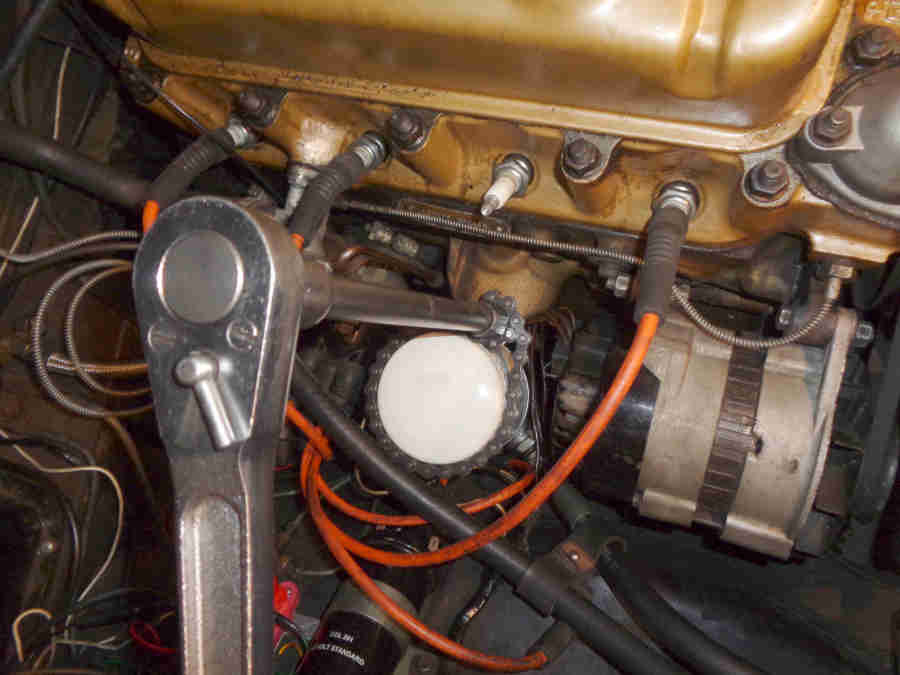 Limited access with the later inverted canister type, definitely needs a tool. Several types - the type with a strap and handle are not really suitable as there is so little space to swing the handle. I've been using a Halfords chain type which uses a socket wrench and long extension for as long as I've had a car - 55 years. The only problem I had was on a 1500 Midget where I couldn't get even that square onto the filter and the chain broke - easily fixed with a repair link. Similar types with a fabric strap (cheaper), and yet others with three legs that clamp onto the end of the filter but they are more than double the price of the chain/strap type and still need a socket wrench and extension.
Care is needed screwing one back on! On the inverted at least the adapter thread is not quite vertical, and it's very easy to cross-thread.
In response to a query about owner conversion to suspended I had to say that from my own experiences with one inverted and two hanging filters I can say for sure that I prefer the inverted! When removing a hanging filter (V8 and ZS) as soon as the seal moves away from the filter head oil starts running down the outside of the canister, and wearing gloves to protect myself from hot oil there is no purchase whatsoever, even though the filter is spinning freely by that time. I have to have sheets of paper to hand to grip it with, which are better than the gloves but still slip and it takes a significant time to get it off altogether. And all the time I'm doing it oil is dripping off the bottom, so I have to have the same 'nappy' of several thicknesses of newspaper underneath it (V8) to catch it. Bad enough on the V8 which is at least tackled from above, but on the ZS which is removed from below the oil is running up my arms as well! At least I can position a bucket under that to catch what is running off, just using masking tape wrapped round the filter for grip. With the inverted on the roadster I position the newspaper underneath formed into a shallow bowl same as for the V8, and once slackened can spin the old filter off and get it 'right way up' much quicker and easier than with the other two.
 Inverted spin-on filters need an anti-drainback valve to prevent the filter from emptying when the engine is switched off, which delays oil reaching the bearings on start-up. Not needed on hanging filters, but I'd expect all good spin-ons (i.e. the Mann 916/1) to have them as a matter of course. However not all do, and some are very poor quality.
For years I used Unipart, Champion or Halfords and had no cause for concern. Then someone posted that after a recent oil change, pressure was taking much longer to build (not just on the first start but subsequently) than before, even when the engine had been off only a matter of hours. So he unscrewed the new filter and was surprised to find no oil flooded out as is usual with the inverted cartridge filters. Thinking he had a bad filter with a faulty non-return valve he fitted a new filter, only to find the same thing happened. I'm pretty sure he had this problem with Unipart and Champion, and I can't remember the final outcome (or even if one was posted). I continued to use filters as before but kept a closer eye on pressure rise than hithertofore, but noticed no change. As I change my oil and filters hot I also continued to find the filters full of oil on removal, however the last Champion 102 I bought does not have an anti-drainback valve. One thing to bear in mind that when starting a 4-cylinder engine daily pressure rise should be practically instantaneous. Only if left for a week or more should it take a few seconds to rise, which it will do more slowly, but should still only take around 6 to 10 secs. for full pressure. V8s are renowned for their very slow start and rise times, after just a few hours, but this is because of having twice the number of cylinders i.e. bearings plus hydraulic tappets. Early V8s had the gauge tapping on the filter outlet, moved to the oil pump in December 73 on car number 1149 "for improved reading on pressure gauge when starting engine", which is what mine has, I dread to think how slow it must have been before. I've tried an alternative gauge with larger bore plastic tubing compared to the copper capillary, but it made little difference, neither does bleeding the capillary compared to having it full of air. It's just a factor of the engine.
To get back to filters, my interest was now piqued, and doing some internet research came across Russ Knize's Oil Filter Study (this is an edited version, the original has gone) which goes into quite a bit of detail about filter construction, albeit of American filters, which shows that the type and quality of materials and construction used can vary quite a bit, anti drain-back and relief valve included. However that is dated 2000, and I subsequently found a more comprehensive 2008 version here. Why the old one has been left unchanged I don't know, but there it is. At the same time a well-known source started advertising filters with 'an improved anti drain-back valve' so I bought some in 2005. Part number GFE121F they turned out to be Fram filters PH2857A. Fram make a number of different 'grades' and some don't get a very good write-up. Even worse, when fitting one to the roadster I found the pressure rise time was longer than with the Halfords and Champion, so I kept them back for the V8 which uses the same filter but hanging, and reverted to Champion in 2006. I then came across recommendations for a Volvo filter (3517857-3), made by Mann (W917). As I have a Volvo dealership nearby I bought one in 2007, at £7.64 at the time about 50% dearer than Halfords/Champion. I was pleased to find that these filters gave a shorter rise time which lasted the life of the filter. More listening and watching saw K&N Gold filters get an excellent recommendation. After much research I managed to find somewhere I could order these (HP2004), but it was a trek across Birmingham to collect them in 2008 rather than a pleasant trip down a country lane, and they were 50% dearer than the Volvo i.e. double the price of the Halfords/Champion and four times the price of Unipart! In the event they were no better than the Volvo, so for 2009 it was back to Volvo for the roadster, using Champion for the V8 now I have used up all the Fram.
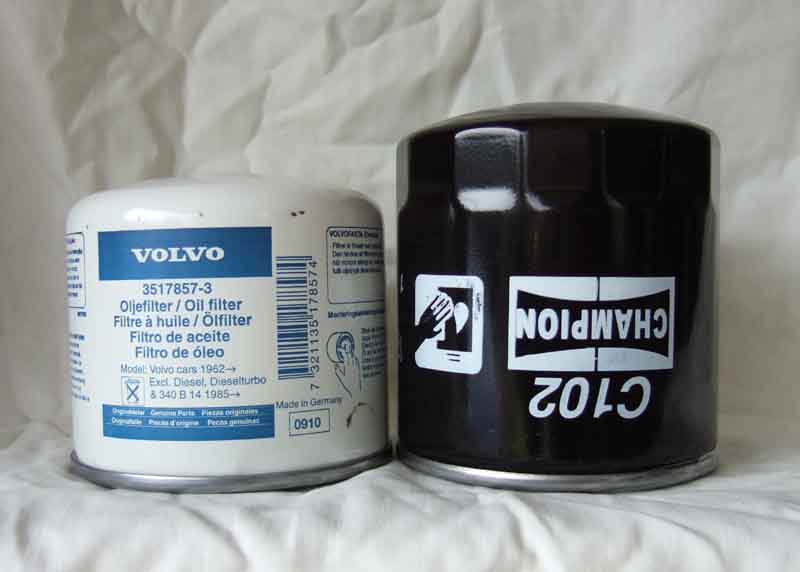 But it was only on purchasing the Volvo filter in 2009 that I noticed it was shorter than the other filters I had been using. I asked if they had been changed but was assured they had not, so I suppose I just didn't notice before. I wasn't particularly bothered by this, until I read something very recently where filter internal depth can be a big issue. There have been several changes in filter head design and orientation over the years, and one of these was to fit an anti drain-back tube to the head that goes up the middle of the filter. This stops oil draining out of the filter via the outlet, as well as the anti drain-back valve in the filter cartridge reducing how quickly oil drains back into the feed pipe. It is absolutely vital that the filter you get is deeper than the length of this tube, and by at least 1/2".
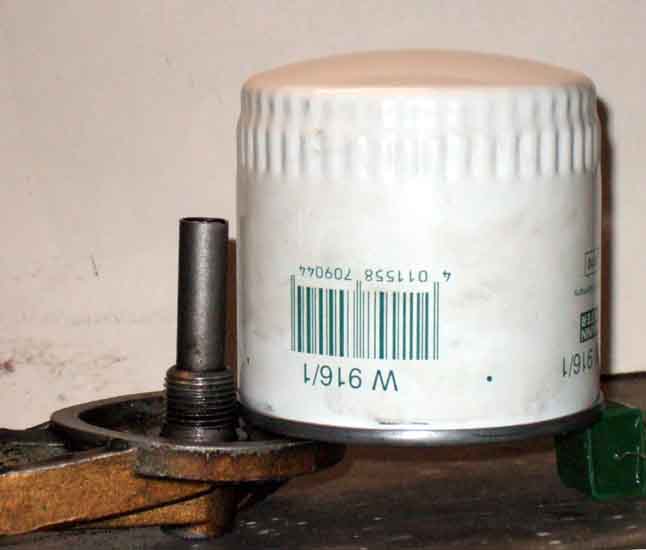 The account I read said the filter was so short it completely blocked the end of the tube, which is the only outlet for oil, the relief valve being inside the filter on cartridge filters unlike the earlier replaceable element type where it was in the filter head. There is a long and boring video (including the Dumb Present Owner filming the running of his engine with no oil pressure!) which demonstrates this using a depth gauge, two filters and a filter head, but you really only need to see these three frames to get the idea. The narrator keeps banging on about the depth of the 'relief valve' but it is the length of the anti drain-back tube and the available depth inside the filter he is measuring of course, which may or may not include a bypass valve. The internal space on the Champion is 2.785", the Volvo is 2.57", and the Mann 917/1 is 2.75" (the last two going inside the bypass valve spring). The Mann 916/1 is 2.93" internally, and the Unipart GFE422/121 is 3.02", these two being the same external height at 3.76". The tube on my filter head is 2" long, and fits inside the bypass valve spring, so plenty of room even for the shorter Volvo and Mann 917/1. Much less difference internally than externally between the Champion and Volvo, i.e. a short filtration cartridge in a long can? Leading you to think you are getting a more effective filter? September 2016: However note that currently the Mann 917/1 as well as being shorter is shown as having a thread of M20 x 1.5, whereas the 916/1 has a thread of 3/4"-16 UNF, i.e. the 917/1 is not an exact equivalent, and I suspect the Volvo 3517857-3 is the same.
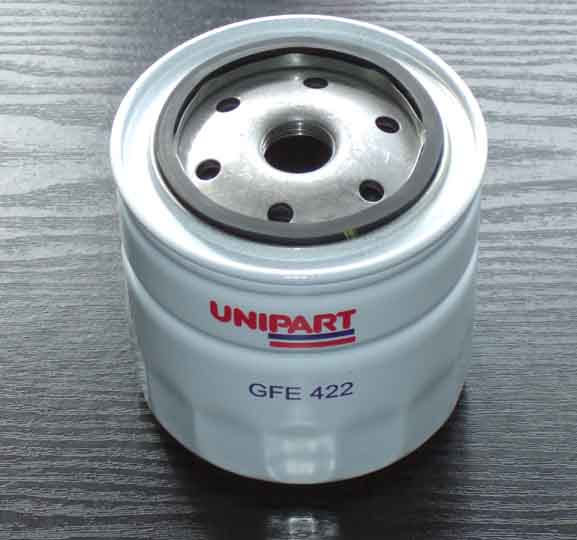 There have been questions about the differences between GFE121 and GFE422. One opinion was that the former had has a magnet on the case but the latter didn't, subsequently debunked by cutting open examples of both, although some filters do seem to have them stuck on the outside. Not sure what effect this has, the can is ferrous, which surely acts as a Faraday cage blocking any magnetism from the inside? Not so, if the magnet is powerful enough it's effects will extend through the metal can. You can get magnetic 'bracelets' to encircle the can, but if you are that concerned you would be better off with a magnetic sump plug and be able to see the effects. Anyway, the GFE422 seems to be a replacement for the 121, being identical, and a parts rationalisation, the two numbers being applied to different applications of the same filter at one point. These are from Unipart, which at just over £3 including VAT are very cheap (worryingly so?) compared to the Halfords/Champion at £5, the Volvo 3517857-3 at £7, and the K&N at £12! Mann W916/1 is a longer version of the Volvo/Mann W917/1, almost as long as Unipart, Champion etc., but I have not been able to find any UK sources from Google, only in mainland Europe. Subsequently Michael Beswick found them stocked by Central Auto Supplies (now Motor Parts Direct) at £2.60 plus VAT (making the others expensive rather than the Unipart cheap), and in November 2014 I find them listed by Halfords at £3.19. March 2019: Halfords now charging £6.26 for the Mann 916/1, and only a week later £8.22! Euro Car Parts have them at £5.89 with free delivery, and at the time of writing a discount code making them £2.94! Bargain.
A fuller list of equivalents can be found at GermanFilters.com but is reproduced here in case the page vanishes, and a list of specifically Mann equivalents for the Champion C102 and Unipart GFE121/422 filters can be found here.
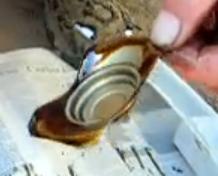 As well as the oil filter study referenced above there are a number of short videos on filter construction here (however don't bother with one titled 'detailed video' as it is nothing more than some idiot taking one out of its box!) and you don't have to see many before you start noticing the different qualities of construction. Several seem to use a very similar 'cartridge' (cellulose/paper with metal end-caps and perforated core), the differences being in the thickness of the case (largely irrelevant) and the quality of the bypass and anti-drainback valves. Some filters don't have a bypass valve at all, just a pressed spring plate which is simply there to seal the centre hole and press the cartridge down onto the base-plate to seal that end. There should be a spring valve as part of this end plate, although some filters are claimed to have the bypass valve as part of the anti-drainback valve, and hence less easily identified. The purpose of the bypass valve is to allow oil to flow if the filter medium should get blocked with dirt, but perhaps more importantly it can also open on cold starts when the oil is very viscous and little flows through the medium. Without this pressure relief as well as lack of oil to the bearings pump pressure could rupture the filter medium, effectively leaving you with no filter at all. The Mann types take about 1 bar or 15psi to bypass, nicely inside the Workshop Manual spec of 13 to 17 psi. Wix (WL7124 for the MGB) seems to come out well, but like the Mann W916/1 don't seem to be available in the UK from a Google search (however a chap at Stoneleigh had a couple of Mann W916/1 at £3 so I bought one, and I won an eBay auction for another at 99p, albeit plus £3 p&p, so I'm OK for a couple of years). June 2011: Nigel in Belfast has written to say that his local motor factors stocks the Mann W916/1.
Anyone still thinking about using Fram (including GFE121F for the MGB remember!) should watch this - the ends of the filtration medium should be clipped together to form a cylinder such that with (cardboard!) end caps all the oil has to flow through the filter, but only half of the length is held in the clip leaving a dirty (pun intended) great hole for unfiltered oil to flow straight through! Also this which seems to show a collapsed filter cartridge, quite probably from not having a bypass valve. Whilst there seem to be several different grades of Fram the element seems to be common (poor), with only minor differences in the valves (poor to not much better). STP (made by Champion!) are even worse than Fram, having the same cardboard end caps (all the other filters viewed have metal) and no bypass valve at the closed end, but only having a plastic former for the filtration cartridge whereas all the others, even Fram, have a perforated metal tube.
Filters not sealing - hose positioning March 2019:
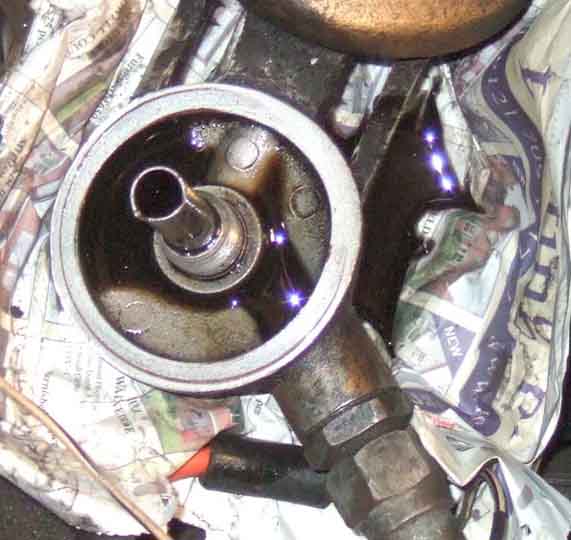 I was beginning to think there must be a problem with the filter head (adapter attached to the block to allow the use of an inverted spin-on canister), even though once sealed there was never a problem until the next service, so got a used one from Welsh MG as a precaution. Again not a problem for the rest of the year, but this year when I removed the filter I cleaned up the sealing surface of the filter head and had a good look at it. And even with my eyes and possible distortion from glasses it immediately looked as if the sealing surface was warped. Smeared some copper grease round the seal of a new filter, wound it on until it just touched, and removed it again. The only grease on the sealing face was at two areas 180 degrees apart from each other, and nothing on the rest. Regreased the seal and fitted the filter again, this time turning it half a turn after contact before removing it again, and this time there is grease round three-quarters of it, but not at the remaining quarter, which is where it has been spurting from. So definitely suspect, and must be changed.
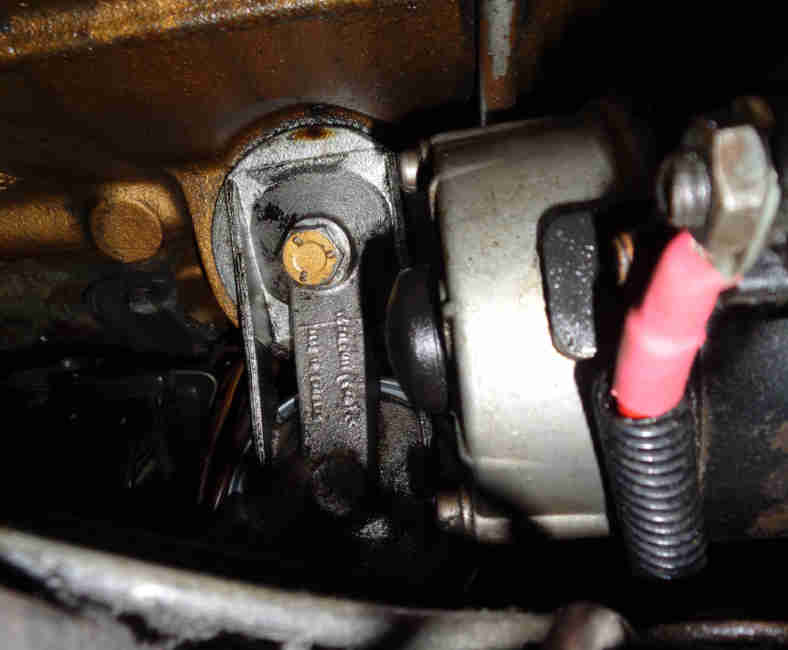 My next concern was how tight the bolt into the block was, after being undisturbed for possibly up to 40 years. I could imagine the bolt shearing, and then what would I do! So got underneath with a long extension on the socket, tentatively applied some pressure to the ratchet handle bearing in mind the brake pipe in the vicinity, and the bolt came undone - it was barely finger tight.
Next possible trauma - the oil cooler hose. An adapter between that and the filter head, with a 9/16" Whitworth hex on the hose connection, and fractionally smaller than that on the adapter. I only have one 9/16 and a Metric spanner which is slightly larger. With the spanner on the hose fitting Sod's Law dictates it is the adapter that comes free first. No big deal, I'm removing the filter head so could unscrew it from the hose. But the 'start' on the new one is quite likely to be in a different place, meaning the cooler hose would be under torsion, and in any case the replacement filter head has its own adapter already fitted. But with the 9/16 on the adapter, and a penny in the jaws of the metric spanner makes that a snug fit on the hose fitting. Squeeze the handles together between my two hands (avoids putting stress on the adapter or filter head) and the hose fitting comes free. Remove that and tie it up out of the way to stop it dripping. With that off and the bolt removed the old filter head comes free with a bit of wiggling.
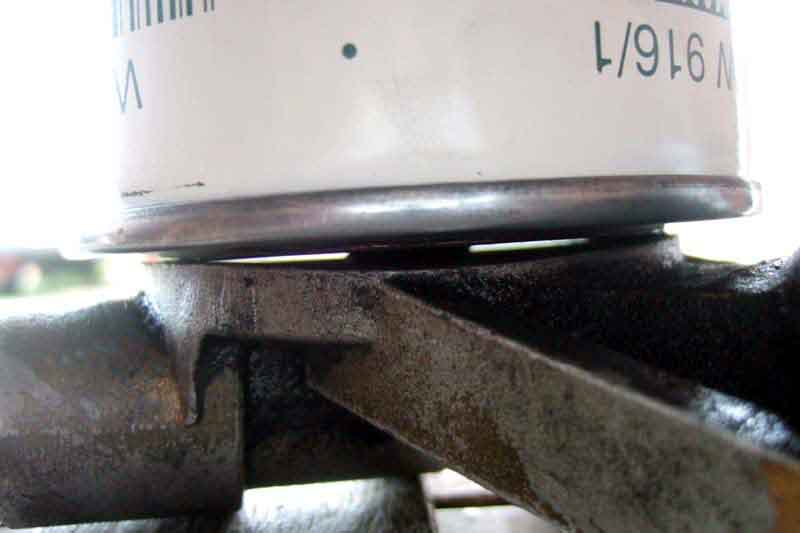 With a new filter screwed on to the old filter head until the seal just touches, there is no-less than 65 thou or 1/16" inch clearance half way between the two places the seal is touching. Even tightened a further half turn there is still 25 thou or 1/32". How did that happen? It's been getting harder and harder to get a seal, so it must have been warping more and more over the years, but how?
Any way, check the new filter head with a filter and as soon as it touches it is touching all the way round, so that should solve the problem. For good measure I run a whetstone round the flange that goes up into the groove on the crankcase until that shows clean metal all the way round.
What to do about the sealing ring? It's been in there up to 40 years, and from past experience it can be a beggar digging them out, and there is not much room to get one's arm up to get at the one on the MGB. I poke it with a pointed screwdriver and it still shows some resilience, so opt to leave it in-situ. But for good measure put a smear of flange seal round the lip of the new filter head and bolt up, comparing the angle of the adapter for the oil cooler hose with a photo of the original I took earlier, and fit the hose.
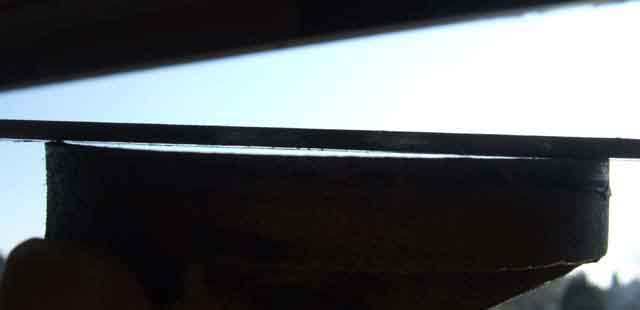 I'd already drained the oil, so refilled it. I'd also decided to take the plugs out, disconnect the coil and crank it on the key first of all in case there was a disaster with oil spurting out all over the place, as that should chuck much less out than an engine on fast idle having to slow and stop. Cranked for a few seconds, looked OK, then cranked again until the oil pressure just started to rise. Still OK from on top, get underneath to see a slight glistening against the crankcase immediately beside where the filter head contacted it. Was that a leak? Or a trace of oil left behind from what leaked out on removal of the old filter head? Replaced the plugs, connected the coil, and fired up. Full oil pressure, and after a few seconds there was a thin line of oil slowly making its way down the side of the crankcase - buggah, should have changed that seal. Nevertheless, running it for ten minutes or more up to full temperature, it had only just reached the flange on the crankcase where the sump attaches, so not major, it will just have to leak like all the others. It was only subsequently when showing a neighbour the warped filter head, when I noticed that the flange that goes up into the groove on the crankcase was like a switch-back! That would have put a set on the seal, making it less likely to seal to a flat surface (the opposite problem of a flat filter seal failing to seal to the warped filter head). Definitely should have changed the seal! Oh well, next time. Next day I thought it was worth tightening the filter head bolt a bit more, as I could feel it tightening onto rubber and not anything solid. Couple more clicks on the socket ratchet, and that together with the old seal quite possibly moving to accommodate the new filter head seems to have stopped the leak - at least I thought it had, but it still weeps a bit, so I shall have to bite the bullet. March 2019: Forgot all about this and no leaks evident since, so left it alone. I didn't change the copper washer on the centre-bolt either, I know people are paranoid about these and re-anneal (soften with heat) at every oil change, but I've never done it on multiple cars over 60 years and not had one leak.
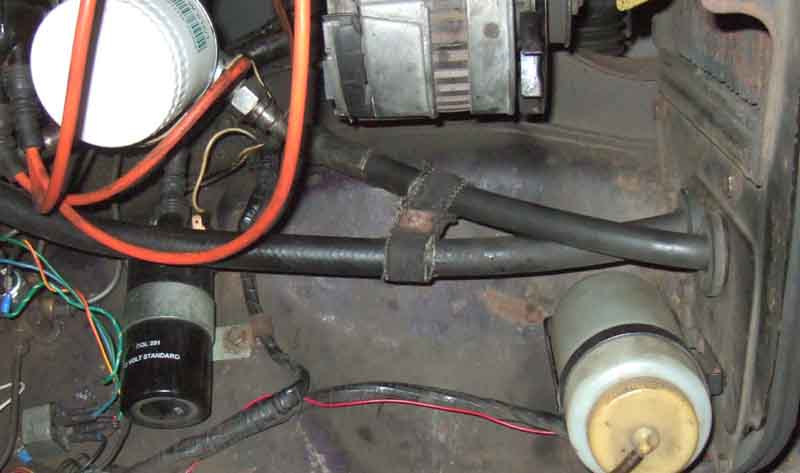 Overnight subconscious pondering also made me realise the cooler hoses go through the wrong holes - the filter head hose is through the upper hole instead of the lower. The strap tying the two hoses together was also very near the filter head. When I went to re-attach the hose to the new filter head I had to push it down quite a bit, when then bent the hose fitting downwards so the threads were nowhere near in line. To bend that back up, while the hose was pushed down, was taking more force that I was prepared to use, so I slid the strap forwards towards the radiator diaphragm which made it much easier to align the threads. It occurs to me that the force I wasn't prepared to use, had been acting upwards on the adapter in the old filter head for anything from 25 to 40 years, in precisely the direction that the filter head had 'bent'. Will I correct the hoses? Probably not until the engine has to come out, or the cooler or hoses replaced.
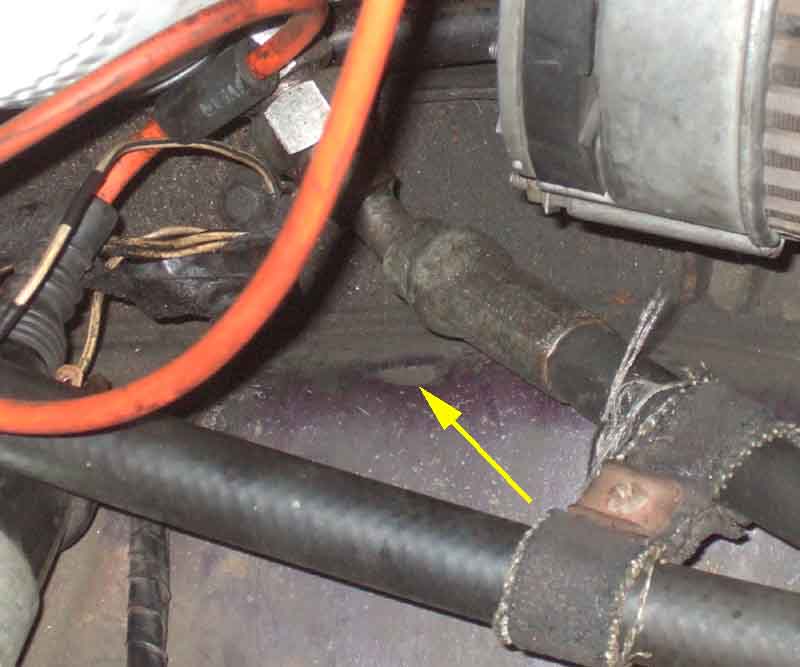 Subsequently I noticed a depression in the inner wing, free of paint and rust, which looks like the oil hose elbow has been rubbing or hitting it, even though I've never been aware of a knocking. The elbow is well clear of it now, but it also raises the question of just what angle the filter head should be wrt the block. At the moment it is angled slightly backwards, which puts it close to the distributor as it was before. At right-angles, or even slightly forwards, would give more clearance to that but put the elbow closer to the alt. However that could be compensated for by adjusting the angle of the elbow.
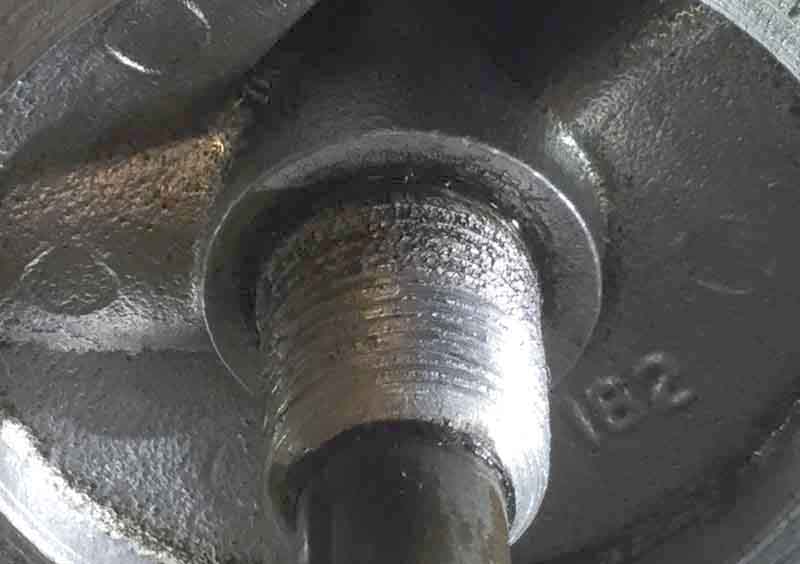 Gavin Sidey on the MGOC forum with a similar problem, but the 'grease ring test' indicated the adapter was flat unlike Bee's. However in this case after tightening the filter, then running the engine and getting oil spurting out, he was finding the filter loose, indicating perhaps it had jumped a thread. The threads are indeed very rough where the filter tightens, so he has one from Welsh MG on the way.